
What does Vegan actually mean?
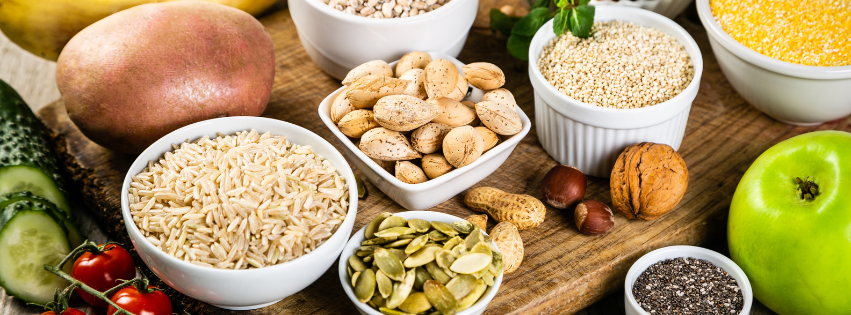
A vegan diet excludes all animal products. That means no meat, fish, dairy, eggs or honey, with everything else coming from plants: vegetables, fruit, grains, legumes, nuts and seeds. Done well, this can be a genuinely varied and satisfying way of eating. Done without much thought, it can quietly leave gaps.
Where the challenges tend to show up
Protein is often the first concern people raise, and for good reason. Plant proteins tend to be less concentrated than animal ones so getting enough at each meal can take a little more planning. Consider building meals around beans, lentils, tofu, tempeh or edamame, rather than treating protein as an afterthought.
Fat is the flip side of this. When meals are built around convenience, it can be easy to overeat on fats, both saturated and trans, particularly from processed vegan products designed to mimic meat and cheese. These items are often engineered to taste satisfying, and fat is doing a a lot of that work. It is important however to maintain an adequate level of healthy fat foods including avocado, seeds (especially chia and flaxseed), nut butters (those with clean and minimal ingredients) and oils such as extra virgin olive oil.
It can often be assumed that because you are eating plant based foods your fibre intake is good but that is not always the case – especially when processed foods become the dominant feature. A vegan diet should still aim to provide approximately 30g of fibre a day. Foods such as lentils, beans, chickpeas, quinoa, seeds, vegetables and berries are great sources to consider.
The nutrients worth watching
A handful of nutrients are naturally harder to obtain from plants alone. Vitamin B12, Iron, Zinc, Iodine, Vitamin D and a long chain of Omega 3s all fall into this category. For most people following a vegan diet long term, some level of supplementation is genuinely worth exploring, alongside regular nutrient testing to see what your body actually needs rather than guessing.
A word on shop bought products
It is worth knowing that shop bought vegan foods, plant based sausages, ready meals and deserts among them, can be quite nutrient poor despite their health ‘halo’. Reading the labels and leaning towards whole foods where possible can make a meaningful difference here.
In summary
A vegan diet build on whole foods, supported by the right supplements and checked with regular testing, can absolutely work well for many people. It is not however, a one size fits all approach. It does not suit every body type and does ask for a genuine investment of time in the kitchen to keep it nutrient rich. As with most things in nutrition, the right approach is one that fits your body and your life, rather than the one making the most noise on line.